Italy
The Ultimate Italy Itinerary — Rome, Tuscany, Venice & the Amalfi Coast
This is the best Italy itinerary for first-time visitors who want the full range — three nights in Rome for the Colosseum, the Vatican, and cacio e pepe in Trastevere; three nights in Tuscany based in the Chianti wine country for truffle hunting and vineyard stays; two nights in Venice for gondolas, cicchetti, and getting properly lost; and three nights on the Amalfi Coast for Positano, sea caves, and a private boat day. Connected entirely by train and ferry, no domestic flights required.
One thing to know before you go: Italy rewards people who book ahead and punishes those who don't. The Colosseum underground, the Uffizi in Florence, and the Borghese Gallery in Rome all require advance tickets — weeks ahead in peak season, not days. Book these before you book anything else.
Rome
🎫 Rome Experiences

The Colosseum Underground — Rome's Greatest Hidden Experience
🏛️ Archaeology · Can't Miss
Most visitors to the Colosseum see the arena floor and the tiered seating above — impressive, but only half the picture. The hypogeum — the subterranean labyrinth of tunnels, cages, and mechanical shafts beneath the arena floor where gladiators waited, animals were held, and elaborate stage sets were stored before being hoisted to the surface — is one of the most extraordinary archaeological experiences in the world. Walking through it, you are in the exact space where, in 80 AD, lions, tigers, bears, and 50,000 spectators' entertainment waited in darkness before the trapdoors opened above.
The engineering is staggering: 32 animal lifts operated by counterweights, a system of corridors designed so that gladiators and animals could move without encountering each other until the moment of their entrance. Access is restricted to specialist guided tours that must be booked weeks ahead — this is not a standard-entry experience. A combined underground and arena floor tour runs 2–3 hours and is the single best way to experience the Colosseum.

The Roman Forum & Palatine Hill at Golden Hour
🌅 Ancient Rome · Most Atmospheric Experience in the City
The Roman Forum — the political, religious, and commercial centre of the ancient world for over a thousand years — is included in the Colosseum ticket and is best visited in the late afternoon when the light turns the marble and travertine stone to gold and the crowds thin to a fraction of their midday density. Walking through the Via Sacra as the sun drops, the Arch of Titus at one end and the Arch of Septimius Severus at the other, with the remains of the temples of Saturn, Vesta, and the Basilica of Maxentius rising around you, produces a very specific quality of historical vertigo.
Climb the Palatine Hill — the hill directly above the Forum where Rome's emperors built their palaces — for the finest view over the Forum. The Palatine is one of the least crowded and most atmospherically beautiful parts of the ancient city, particularly in the late afternoon when the light rakes across the Forum below and the city stretches away in every direction. Allow 2 hours for the Forum and Palatine Hill combined — your Colosseum ticket covers all three.
🏨 Where to Stay — Rome

Tuscany
🎫 Tuscany Experiences

Truffle Hunting in Tuscany — Dawn in the Crete Senesi
🍄 Food & Nature · Unmissable in Tuscany
Truffle hunting at dawn in the Crete Senesi — the white clay hills south of Siena — is one of the most specific and memorable food experiences available anywhere in Italy. A trained truffle dog (most hunters use Lagotto Romagnolos, the traditional Italian truffle breed) moves through the oak woodland at first light, nose down, while the hunter follows with a small pick. When the dog stops and begins to dig, the hunter drops to one knee and extracts the truffle with a tool designed not to damage it. The whole thing is entirely quiet and entirely absorbed in the landscape.
Most truffle hunts include a tasting and cooking session afterwards — the freshly found truffles shaved over pasta, scrambled eggs, or bruschetta, with the hunter explaining the difference between black (cheaper, more intense) and white (more expensive, more delicate) varieties and why white Tuscan truffles are worth the extraordinary price they command at market. Autumn (October–November) is peak white truffle season; black truffles are available year-round. A half-day experience with a local hunter and lunch typically costs €80–120 per person.

Stay in a Tuscan Vineyard Villa — Agriturismo in Chianti
🍷 Wine & Countryside · The Definitive Tuscany Stay
Staying in a working vineyard agriturismo (farm stay) in the Chianti wine country between Florence and Siena is the most Italian thing you can do in Tuscany and one of the most pleasurable things you can do in Europe. Wake up to cypress trees and rolling vineyards, eat breakfast in a stone farmhouse kitchen, and spend the day with no agenda beyond tasting wine, driving slowly through medieval hill towns, and eating a very long lunch somewhere with a view. This is the Italy that the photographs advertise and the reality delivers.
The Val d'Orcia — the UNESCO World Heritage valley south of Siena — is the most photogenic landscape in Europe: chalk-white roads winding through cypress-lined hills, isolated farmhouses, and the medieval hill towns of Montepulciano, Pienza, and Montalcino visible on the hilltops. Drive it slowly. Stop at every view. The Pecorino cheese from Pienza and the Brunello wine from Montalcino are among the finest food and drink products in Italy. Most agriturismos in the area offer wine tasting and farm-to-table dinners.
🏨 Where to Stay — Tuscany

Venice
🎫 Venice Experiences

Private Gondola at Dusk — Venice's Secret Canals
🚣 Iconic · The Essential Venice Experience
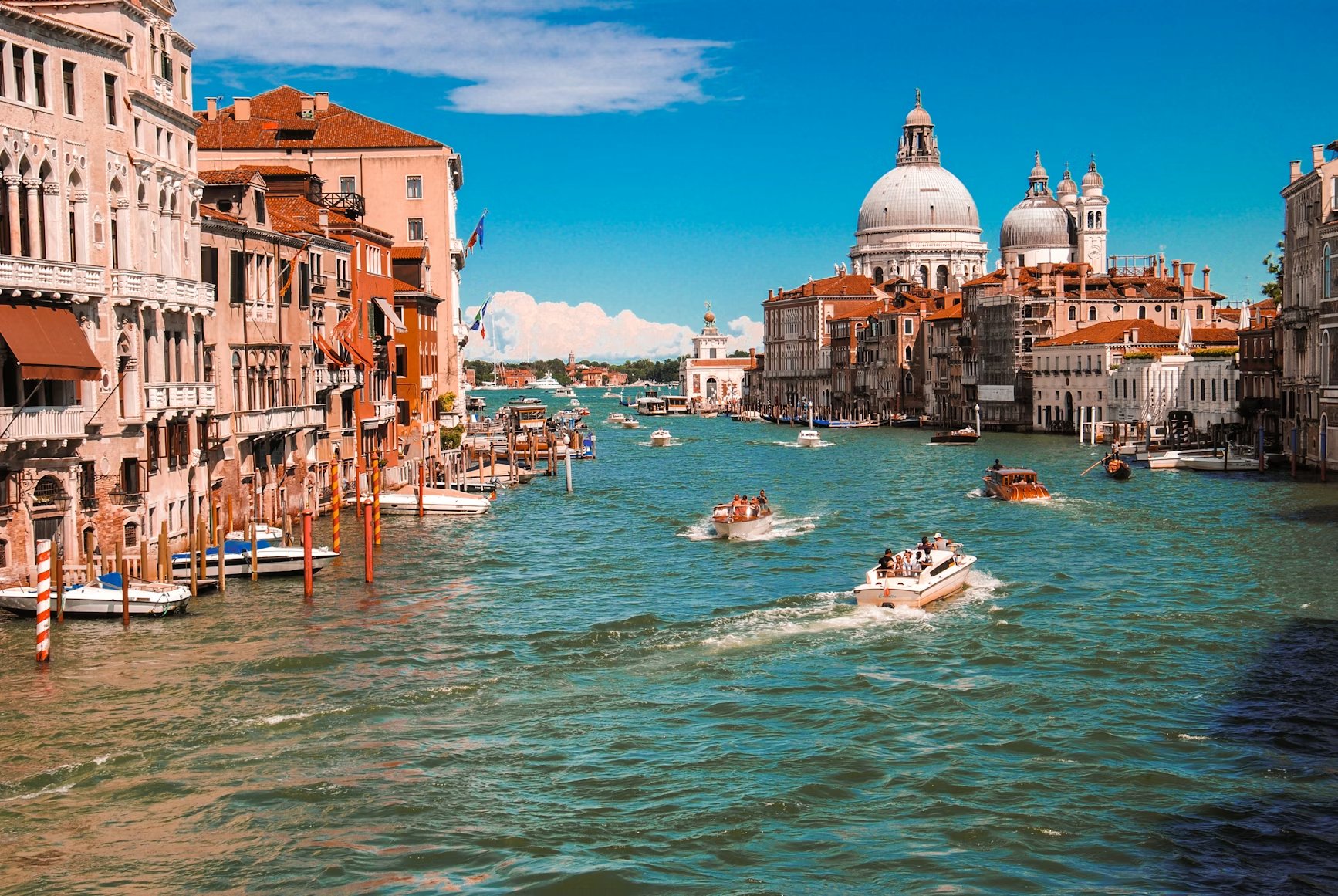
Venice's gondola has become shorthand for tourist kitsch — overcrowded, overpriced, and soundtracked by someone singing O Sole Mio at volume. The private gondola through Venice's backwater canals at golden hour is something entirely different. Away from the Grand Canal and the main tourist routes, the city opens up: narrow rii (smaller canals) barely wider than the gondola itself, medieval palazzo facades reflected in dark water, washing lines between windows, silence broken only by the gondolier's oar. This is the Venice that exists under the tourist surface and is still completely extraordinary.
Book a private gondola (not a shared ride) and ask specifically for the backwater canals away from San Marco and the Grand Canal. Late afternoon — two hours before sunset — gives you the best light and the most atmospheric conditions. A standard 40-minute ride costs around €80–100 for the gondola; agree the route and duration beforehand. Most gondoliers are third or fourth generation and know the city at a level that makes them worth talking to if your Italian or their English is up to it.
🏨 Where to Stay — Venice

Amalfi Coast
🎫 Amalfi Coast Experiences

Sail the Amalfi Coast by Private Boat
⛵ Coastal · The Best Day on the Amalfi Coast
The Amalfi Coast is genuinely as beautiful as its photographs suggest — but the experience is transformed by seeing it from the water rather than the congested coastal road. Charter a traditional wooden gozzo (a flat-bottomed wooden boat typical of the Amalfi coast) and spend a day cruising past the coloured villages of Positano, Praiano, and Atrani, stopping at sea caves accessible only by boat, swimming off the back in water that is clear to 10 metres, and ending with a limoncello and a plate of fresh anchovies while anchored in a cove with the cliffs towering overhead.
A full-day private boat charter from Positano or Amalfi town typically costs €400–600 for the boat (split between the group), includes stops at the Emerald Grotto (a sea cave with extraordinary light), the small beach at Furore, and optionally a run to Capri for the Blue Grotto — the most famous sea cave in Italy, where the light refracts through an underwater opening to turn the entire interior an extraordinary electric blue. The Blue Grotto requires a separate entrance boat (€15) and can have queues in peak season; arrive early.
🏨 Where to Stay — Amalfi Coast

Italy Trip FAQs
What is the best Italy itinerary for first-time visitors?
The best 11-night Italy itinerary covers four regions: Rome (Days 1–3) for the Colosseum underground and the Roman Forum at sunset; Tuscany (Days 4–6) for truffle hunting and a vineyard villa stay in Chianti; Venice (Days 7–8) for a private gondola through the backwater canals; and Amalfi Coast (Days 9–11) for a private boat day and Ravello. All connected by Italy's excellent high-speed train network.
What is the best time to visit Italy?
April, May, and September are the best months — warm, sunny, and far less crowded than summer. July and August are extremely hot (35–40°C in the south), overwhelmingly crowded, and prices peak. October is excellent for Tuscany during harvest season. Avoid August in Rome and Venice — the cities partially shut down and the tourists who remain fill every queue.
How far ahead do you need to book Italy attractions?
Book the Colosseum underground 3–4 weeks ahead minimum — it sells out completely. The Vatican Museums: 2–3 weeks. The Uffizi in Florence: 2 weeks. The Borghese Gallery in Rome: 2–3 weeks (timed entry only, strictly enforced). For peak summer (June–August), double all those lead times. Book everything before you book your accommodation.
Do you need a car in Italy?
For this itinerary: yes, for Tuscany only. Rome, Venice, and Amalfi Coast (via ferry and bus) are all car-free. Tuscany requires a car to explore properly — the Chianti wine country, Val d'Orcia, and the hill towns are inaccessible by public transport at any useful pace. Note that ZTL restricted zones in historic city centres carry automatic fines — never drive into any old town without checking first.
Book ahead: Vatican, Colosseum underground, Uffizi, and Borghese Gallery all require advance tickets. Book before your flights, not after. In peak season they sell out weeks ahead.
Trains: Italy's Frecciarossa high-speed network is fast, comfortable, and far better than flying between cities. Book via trenitalia.com or italotreno.it. Validate regional train tickets before boarding.
ZTL zones: Historic city centres in Italy are restricted traffic zones with automatic camera fines. Never drive into any old town without checking — the fines arrive weeks later and are non-negotiable.
Gelato: Good gelato is served from a metal container with a lid. Gelato piled in colourful mountains in the shop window is for tourists. Find a gelateria where you can't see the gelato until it's scooped.
Meal times: Italians eat lunch 1–3pm and dinner 8–10pm. Eating outside these hours means tourist restaurants. Adjust your schedule and eat when Italy eats.