🇬🇷 Greece · Complete Activity Guide
🇬🇷
Things to Do in Greece
ATVs on Santorini's volcanic coastline, sea cave kayaking in the caldera, the Acropolis at sunrise, and Aegean cliff jumping on Milos
Greece offers some of the most unique and visually extraordinary travel experiences in Europe — from riding an ATV around Santorini's volcanic black beaches to cliff jumping into the crystal-clear Aegean at Milos's cathedral sea caves, or watching the sun rise over Athens from the Acropolis before the crowds arrive. The best things to do in Greece combine ancient history with some of the most spectacular island landscapes in the Mediterranean.
This guide covers the coolest and most unforgettable things to do in Greece in 2026 — the bucket list experiences that go beyond the tourist trail and show the country at its most spectacular.
Santorini's famous image — white cubic houses on the caldera rim at Oia, the blue-domed churches, the sunset — represents perhaps 20% of the island's actual character. The rest of Santorini is volcanic lunar landscape: black and red volcanic beaches, ancient Minoan ruins preserved under metres of ash, vineyards growing ungrafted vines in volcanic soil that have survived phylloxera because the island's geology kills the parasites, and clifftop roads with views that no tour bus itinerary includes.
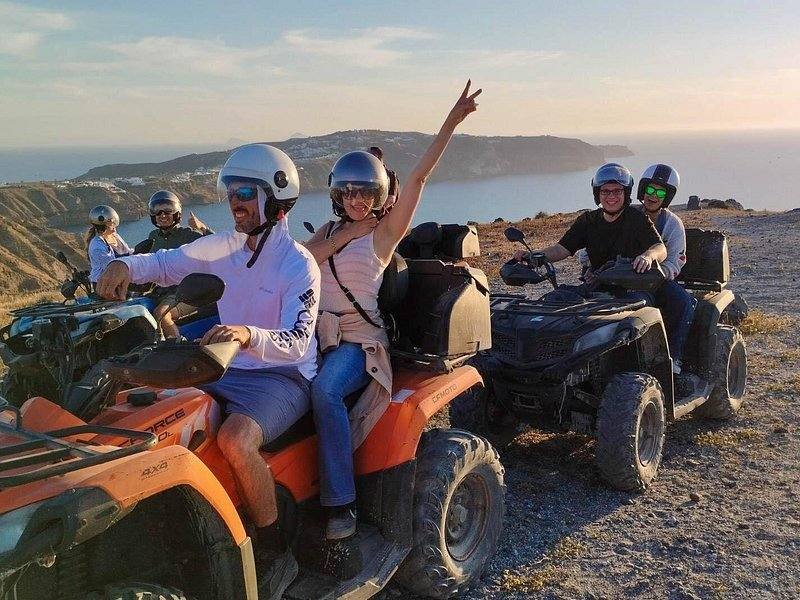
An ATV for the day unlocks the whole island. Perissa and Kamari beaches — long stretches of black volcanic sand that get genuinely hot in the midday sun — are on the east coast far from the caldera crowds. The red beach near Akrotiri (named for the ochre and crimson volcanic cliffs surrounding it) is accessible only by boat or a short scramble; nearby are the Akrotiri ruins, a Minoan city buried under volcanic ash 3,600 years ago and still being excavated. The route back to Fira via the inland villages passes vineyards where the vines grow in the distinctive kouloura basket shape — training them low and circular to protect from the island's ferocious winds.
Start early — by midday the roads in the main villages are congested and the black sand beaches are hot enough to require shoes. The western coast cliff roads are best in afternoon light.
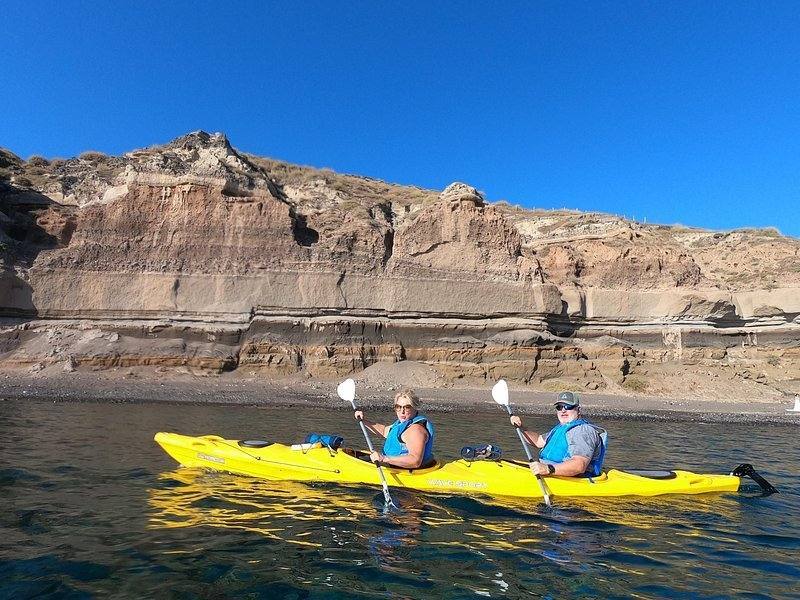
Kayaking into the Santorini caldera from water level gives a perspective on the island that the millions of tourists photographing the caldera from the cliff edge never see. The caldera walls — up to 300 metres of sheer volcanic cliff — tower above you as you paddle across the flooded remains of a supervolcano crater that last erupted 3,600 years ago, probably triggering the collapse of the Minoan civilisation. The scale only becomes real when you're at the bottom of it.
Guided kayaking tours from the village of Ammoudi (below Oia, reached by 214 steps) or from beaches on the caldera rim take you to Nea Kameni — the active volcanic island at the centre — where you can swim in the geothermal hot springs that bubble up at around 35°C and turn the water a milky sulphurous colour. Sea caves along the caldera wall have entrances just large enough for a kayak, and the interior chambers open into extraordinary spaces of black volcanic rock with the Aegean visible through narrow openings.
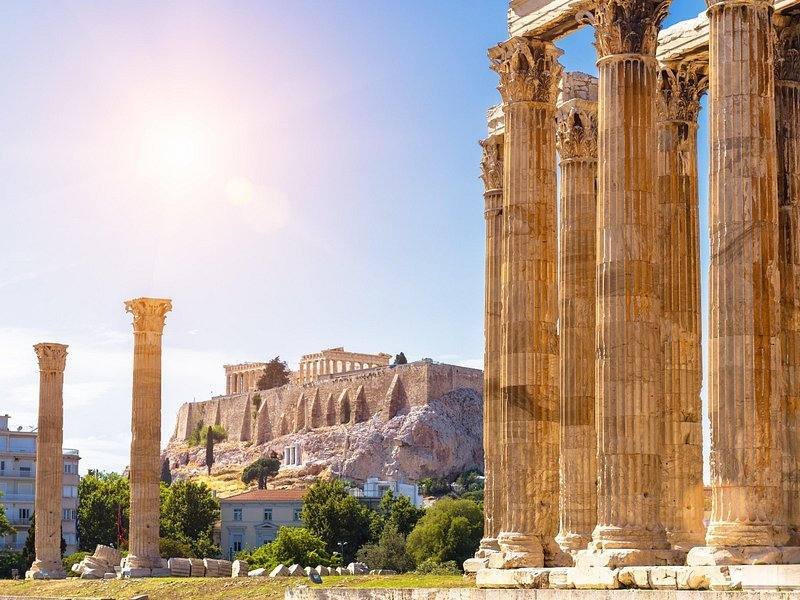
The Acropolis at sunrise — arriving exactly at opening time, before the first cruise ship passengers reach the hill from Piraeus — gives you 30-45 minutes on one of the most important archaeological sites in the world with almost no other visitors. The Parthenon in the first light, when the ancient marble is still cool and the city below is only just beginning to wake, has a presence and a silence that the midday version, surrounded by thousands of tourists and tour guides with umbrellas, completely lacks.
The Parthenon is the most technically perfect building in ancient Greek architecture — the entasis (slight convex curve of the columns), the upward curvature of the stylobate, and the inward tilt of the corner columns are all deliberate optical corrections designed to counteract the visual distortions that perfectly straight lines would appear to have at this scale. Standing next to the columns and looking down their length, you can see the curve. The Erechtheion's Caryatid porch — six female figures serving as architectural columns — is perhaps the most haunting individual element on the site.
The view from the Acropolis at sunrise — Athens spread across the Attica basin in every direction, the Saronic Gulf visible to the south, the hills of the Peloponnese on the horizon — is one of the finest urban views in Europe.
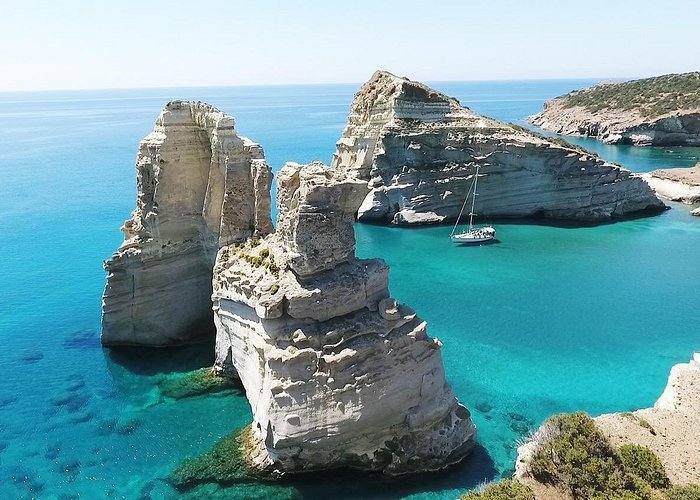
Milos is the most geologically extraordinary island in the Cyclades — a volcanic landscape of lunar rock formations, sea stacks, arches, and caves carved by the Aegean into pale pumice and obsidian cliffs. The Kleftiko sea caves on the island's southwest coast are the signature experience: a series of massive chambers carved into the white volcanic rock by millennia of wave action, accessible only by boat, with water so clear that the bottom is visible at 10 metres and colours ranging from pale turquoise to deep cobalt in the space of a single bay.
A full-day boat tour from Adamas harbour takes you to Kleftiko first — snorkelling in the sea cave chambers, swimming through natural arches, cliff jumping from the rock platforms into the crystal water — then continues along the southern coast to the Sykia cave (a cathedral-like sea cave open to the sky through a collapsed roof) and the coloured rock formations of the Sarakiniko moonscape on the north coast. The colours of the rock — white, orange, green, black — and the extraordinary transparency of the water make it one of the most visually spectacular boat days available anywhere in the Mediterranean.
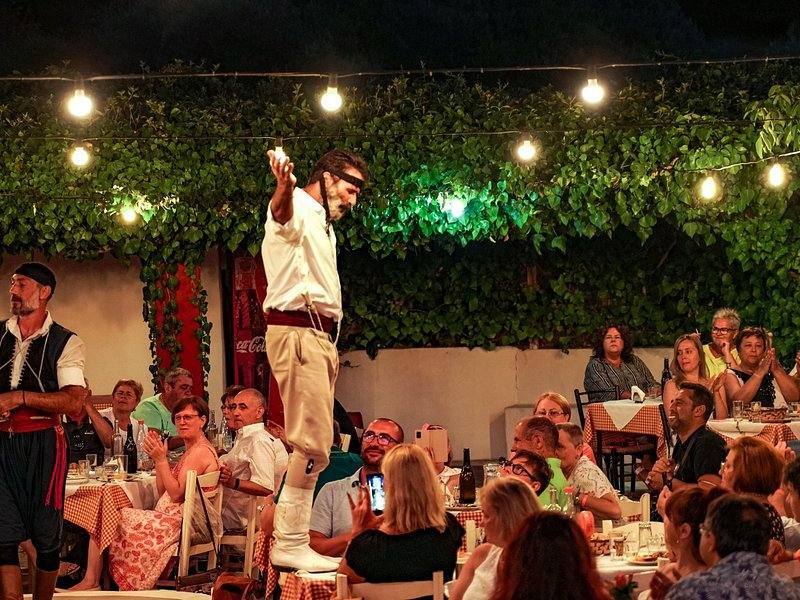
Cretan food is categorically different from Greek food elsewhere — the island's relative isolation and distinct agricultural tradition has produced a cuisine that is one of the most compelling and healthy in the Mediterranean, built on olive oil, wild herbs, legumes, and the extraordinary cheeses and cured meats of a pastoral tradition that goes back 4,000 years. A long meze dinner at a village taverna in the White Mountains or the Lasithi Plateau — away from the tourist coast — is one of the most satisfying food experiences in Greece.
A proper Cretan taverna meze involves 8-12 small dishes: dakos (dried barley bread with tomato and mizithra cheese), loukoumades (honey fritters), slow-braised lamb with stamnagathi (wild greens), fresh fava (yellow split pea dip), grilled octopus if you're near the coast, kalitsounia (cheese pastries), and a bottle of house wine. Raki — the Cretan spirit distilled from grape pomace — arrives uninvited and frequently. The meal lasts 3-4 hours and the conversation extends beyond it.
The White Mountains village of Anopoli, the market town of Rethymno, and the villages of the Amari Valley are the best areas for authentic Cretan tavernas. Avoid the seafront tourist restaurants in Heraklion and Chania in favour of anything up a hill or down a side street.